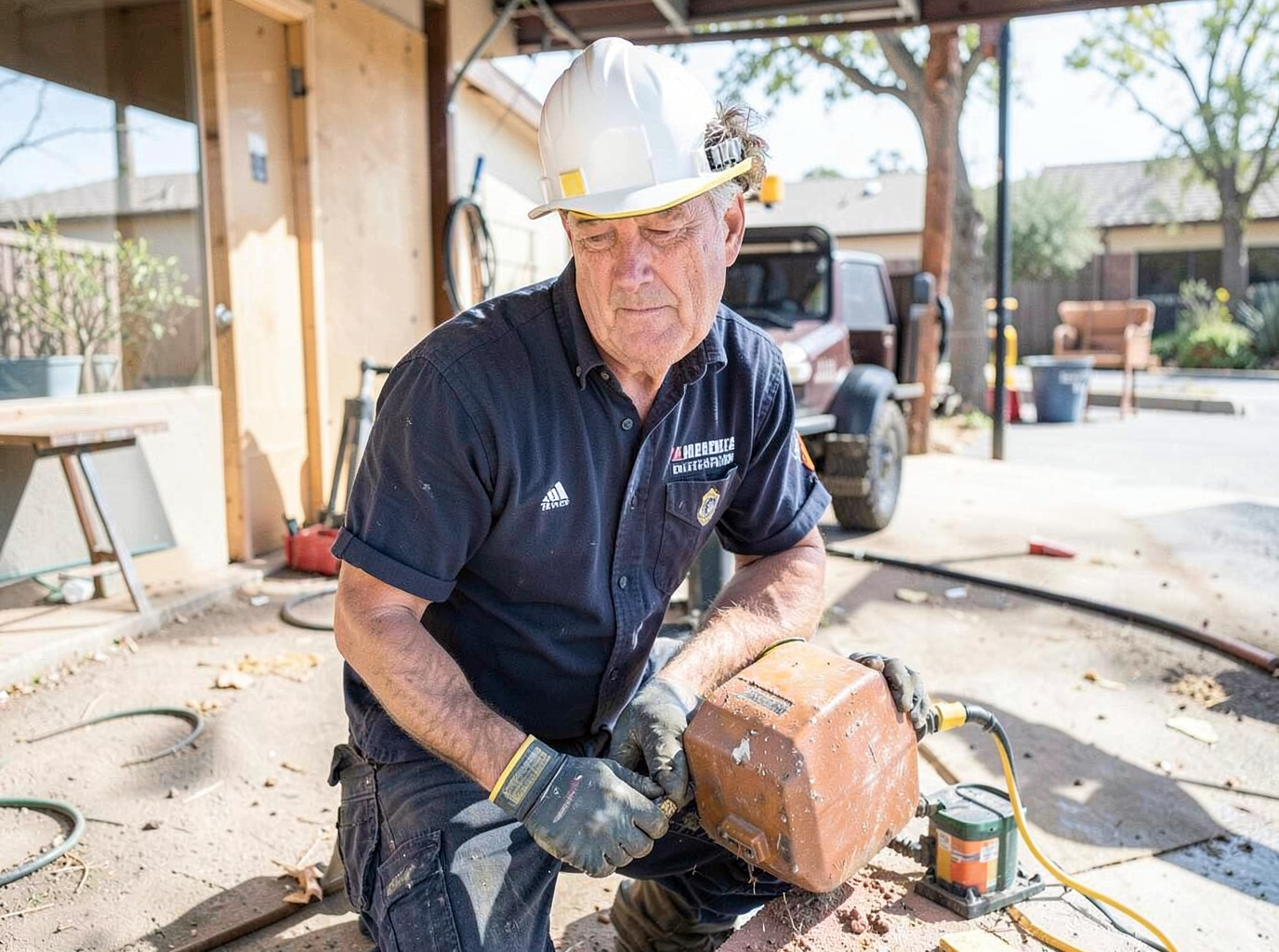
Moreno Valley Water Damage Restoration pros respond directly to calls from March Air Reserve Base and the surrounding military housing zones. Older base homes built from the 1940s through the 1970s sit on concrete slabs that crack over time, letting irrigation or storm water migrate under floors. Hot summer heat accelerates mold once moisture enters walls, so crews prioritize rapid extraction along streets like Graeber and Riverside Drive.
Access points near the main gate and Van Buren Boulevard require coordination with base security, yet our trucks reach most residential blocks inside the perimeter quickly. Flat terrain around the airfield means water pools behind homes rather than draining toward Lake Perris, so we often set up perimeter barriers and dehumidifiers in garages and utility rooms before drywall removal begins.
Nearby March Field Air Museum and Cactus Avenue corridors see similar issues after heavy winter rains. We map moisture with thermal cameras in these single-story ranch homes, then focus drying on the thicker insulation common in military construction to prevent hidden growth between studs.
Around 13. March Air Reserve Base
We regularly work near:
- 📍March Air Reserve Base
- 📍March Field Air Museum
- 📍Van Buren Boulevard
- 📍Graeber Street
- 📍Cactus Avenue
Water Damage Restoration in 13. March Air Reserve Base — Local Notes
- •Slab-on-grade homes near the runways often develop hairline cracks that allow irrigation water to wick upward during Moreno Valley's hot summers.
- •Flat lots behind the base perimeter fence trap runoff from Van Buren Boulevard, requiring extra perimeter damming before extraction equipment can reach interior walls.
- •Military housing stock from the 1950s features limited crawl spaces, forcing crews to cut inspection ports rather than rely on attic access for moisture mapping.
- •Proximity to March Air Reserve Base means security gate delays, so we stage equipment at the 22849 Parkham St yard for same-day arrival once cleared.