2026-11-10 · Javier Soto
How to Spot Hidden Water Damage in Older Moreno Valley Properties
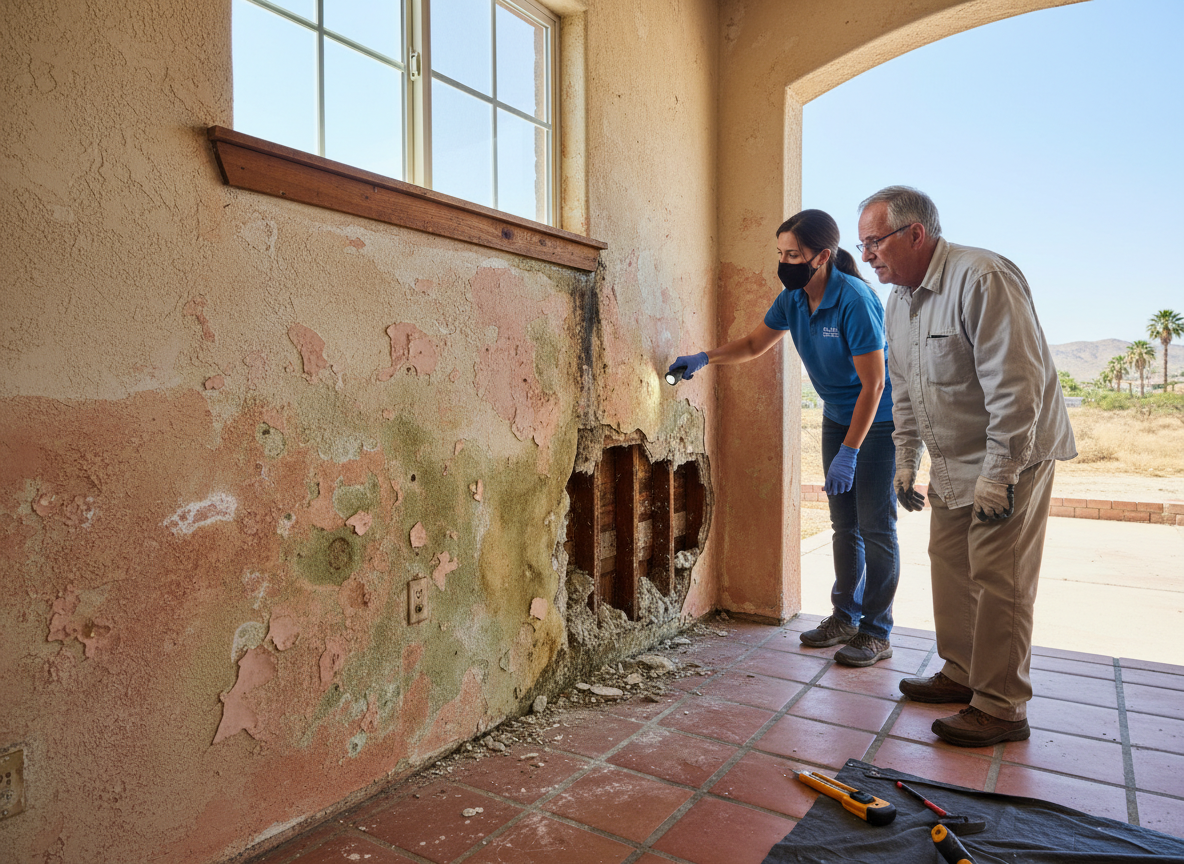
Start by examining ceilings, walls, and floors for discoloration, soft spots, or musty odors in homes constructed before 1990 across Sunnymead and Edgemont, where many properties sit on older plumbing that expands and contracts with temperature swings from hot summers to mild winters.
Checking Ceilings and Walls for Hidden Leaks
Begin inspections in attics and upper floors where roof penetrations around vents or skylights commonly allow water entry during rare but intense winter storms. Look for yellow-brown stains on drywall that measure 6–12 inches across, often appearing near bathroom exhaust fans or kitchen plumbing stacks. In Moreno Valley Ranch neighborhoods, stucco exteriors on 1970s–1980s homes can trap moisture behind the surface when irrigation overspray hits the base, leading to bubbling paint or efflorescence on interior walls. Run a moisture meter along baseboards in rooms adjacent to March Air Reserve Base flight paths, where vibration may loosen pipe joints over time. Document any temperature differences greater than 5 degrees Fahrenheit between adjacent drywall sections, as these indicate active seepage from supply lines. Homes near the Moreno Valley Mall frequently show these patterns because original copper piping installed in the 1980s now experiences pinhole leaks after decades of mineral-rich water exposure.
Examining Flooring and Foundation Areas
Lift carpet edges or remove base shoe molding in older single-story homes in Lake Perris and Edgemont to check for cupping hardwood or buckling laminate, which signals subfloor saturation from slab leaks. Concrete slab foundations common in Riverside County properties built before 1985 often develop hairline cracks that allow groundwater to wick upward during the mild winter months when soil moisture lingers. Measure any gaps wider than 1/8 inch between tile grout lines in bathrooms, as these indicate movement from repeated wetting and drying cycles driven by hot summer evaporation. In properties near Lake Perris, check crawl spaces for standing water or mold growth on joists, especially where drainage slopes toward the lakebed. Warped door frames or sticking cabinet doors in kitchens can also point to hidden moisture affecting the substructure, particularly in homes within a half-mile of the lake shoreline.
Reviewing Plumbing and HVAC Systems
Trace visible supply lines under sinks and behind water heaters for corrosion or green patina on copper fittings, a frequent issue in 30-year-old homes throughout Perris and San Bernardino border areas. Inspect around the water heater pan for rust rings or mineral deposits that suggest slow leaks have been occurring for months. In Sunnymead properties, galvanized steel pipes installed in the 1970s often corrode from the inside, creating pinholes that wet insulation without visible exterior signs until drywall softens. Examine HVAC condensate drains for clogs that force water back into the system, especially after summer cooling seasons when high humidity condenses on cold coils. Test shutoff valves by turning them fully clockwise and listening for drips, as older valves in Moreno Valley Ranch homes frequently fail to seal completely after years of sediment buildup.
Accounting for Local Climate and Terrain Effects
Hot summers accelerate evaporation that masks active leaks until winter rains arrive, making fall inspections critical for homes near the base of the Box Springs Mountains. Mild winters with 8–12 inches of annual rainfall concentrate water around foundations in low-lying Edgemont lots where drainage historically flows toward Lake Perris. Properties adjacent to the Moreno Valley Mall parking lots sometimes experience additional runoff from paved surfaces that saturates soil against exterior walls. Schedule checks after any rainfall exceeding 0.5 inches, focusing on south-facing walls that receive the most sun exposure and therefore dry fastest, hiding ongoing issues. Water Damage Restoration professionals familiar with these patterns can differentiate between seasonal condensation and true structural leaks. For detailed guidance on post-rain assessments, review Water Damage Restoration After Winter Rains in Moreno Valley. Readers planning repairs should also consult the Cost Guide for Water Damage Restoration in Moreno Valley Homes and consider Water Damage Repair options suited to Riverside County housing.